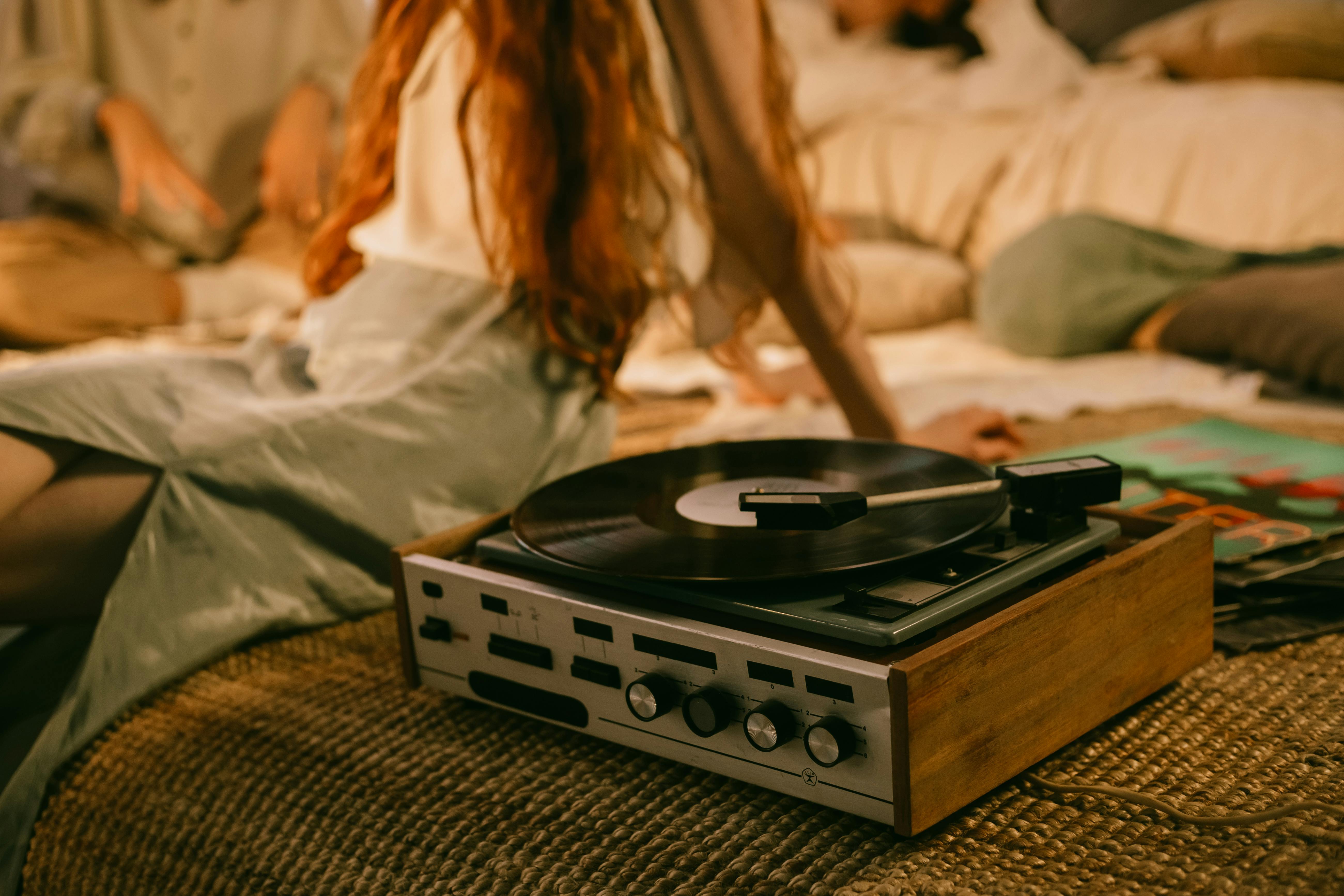
There was a time when listening to music required a small but meaningful effort. You chose a record; you slid it out of its sleeve carefully, mindful of fingerprints; you placed it on the turntable, lifted the tonearm, and gently lowered the needle.
Compare that to how music works now. You tap a screen, a song starts instantly; you skip halfway through, queue another track, or let an algorithm decide what comes next. There is no preparation, no pause, and no sense of occasion.
This is not a complaint about technology, but there is no denying that many of us feel nostalgic for the tangible experience that came with physical media. From a custom vinyl LP to printed photographs, let us look at why and how analog is making a comeback.
When Convenience Replaces Connection
Today, digital convenience extends far beyond music. Photos live in clouds instead of albums. Books sit unread on devices filled with distractions. Movies and TV shows autoplay endlessly, often half-watched and quickly forgotten. When everything is instantly available, nothing feels especially chosen. Media becomes something we scroll through rather than sit with. The abundance is impressive, yet it rarely leaves a mark.
Digital media is designed to remove friction, yet it was this friction that created meaning in the first place. Choosing a movie meant committing an evening to it. Finishing a book required staying with the same story for days or weeks. Photographs had a sense of mystery since you never knew how they would turn out. Today, the constant option to switch or skip offers the audience nothing more than a superficial engagement.
When moments are endlessly documented but rarely revisited, they lose their emotional weight. We know this because thousands of photos sit untouched and forgotten on our smartphones. Convenience gives us more content than ever, but it also trains us to move on quickly. And for many people, especially those who remember life before everything was digital, there is a growing desire to reclaim meaning and connection.
Seeking Things That Ask for Time
Analog is not becoming popular again just because it is novel. It is appealing because it slows life down in a way that feels intentional rather than restrictive. They ask you to engage with them fully or not at all. For people who spend their days jumping between screens, tabs, and notifications, that single-purpose nature feels oddly luxurious. It creates a small pocket of focus in a world that constantly shouts for your attention.
There is also something reassuring about the limits built into analog objects. A record has two sides. A book has an ending. A roll of film has a fixed number of chances. These boundaries encourage care and commitment. You will not skim a vinyl album the way you skim a playlist. And you do not take 30 photos with a film camera, hoping one will be good. You choose more deliberately because the medium demands it.
Perhaps most importantly, analog objects feel “lived in” in a way digital ones rarely do. These objects store more than just content; they also store context. They hold traces of time in a way digital things simply cannot. A wrinkled paperback, a scratched record, a faded photograph. These imperfections are evidence of time well spent. They transform the objects into artifacts, imbued with personal history and human experience.
Artists and musicians are part of this shift, too. More creators are choosing to release work in physical formats—not out of nostalgia alone, but because analog changes how their work is received. A custom vinyl LP or a limited-run photo book asks the audience to invest and engage with the work as a whole. In an era of constant output and instant consumption, analog formats allow artists to reclaim a little physical space.
Reconnection, Not Regression
If you are someone who feels the same wistful longing for the past, you are not alone. You do not need to abandon technology or pretend that convenience has not improved your life, but you can choose more experiences that require your full attention. Read a physical book instead of watching reels; listen to an entire album without skipping a single track; or print and hang your favorite photographs instead of storing them indefinitely on your phone.
Reconnection happens when you slow things down on purpose. When you stay with a moment instead of glancing at it and scrolling on. Analog does not demand much, but it gives so much back: focus, learning, and a sense of continuity. By choosing to spend time with fewer things and engaging with them more deeply, you gradually develop a sense of “real life”, not just a series of disembodied digital newsfeeds.
Conclusion
In the digital world, what once felt deliberate now feels disposable. The pull toward analog is not just aesthetic nostalgia or a rejection of progress. It is a measured response to how modern “efficiency” has changed our relationship with attention and memory.
Not everything needs to be optimized or quickly available to be valuable. From listening to an LP to writing a letter, reintroduce something physical into everyday moments. Nostalgia, in this sense, is a reminder to stay with something long enough for it to matter.